
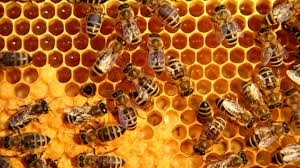
Bee Keeping in Kenya: Did you know that bee venom is seven times more costly than Gold? A GRAM of Bee Venom costs KSh. 8,000. A Kilo of Propolis is Ksh. 1,800. A KILO of Royal Jelly costs KSh. 42,000. A kilo of honey currently retails for KSh. 600.
Honey is five times more expensive than oil and its demand is increasing not only in Africa, but all over the world. Priced at between $6-$11 (Ksh. 500 – Ksh. 1,100), one kilo of honey in Kenya costs five times what a litre of petrol does, and in the Arab market, a jar of honey can fetch almost double this amount ($15-$25).
It is a price tag that has honey producers all over the world salivating.
Since independence, Kenya has had deficit in honey production which leads to over 80 per cent of honey processed in Kenya being imported from Tanzania while there is a lot of potential for beekeeping in the country in fact, Leading honey producers in Africa such as Ethiopia, Zambia, Tanzania, Uganda and Zimbabwe have the same favourable climatic conditions for beekeeping as Kenya. There is a global shortage of honey and although Kenya has the potential to at least bridge part of it, little effort has been made in this direction.
Bee-keeping in Kenya has been practiced traditionally for many years. However only 20 per cent of the country’s honey production potential (estimated at 100,000 metric tonnes) has been tapped. Many farmers in Kenya are yet to commercialize honey production as the sector is still regarded as a preserve of the poor. This has been the case while there is a huge market for the product in Europe, Asia and the Middle East.
SO, how can you use available aspects to gain from bee keeping:
1. Favourable Weather Conditions.
Our country is endowed with favourable weather conditions that bees prefer, which is warm and wet. Areas in the Eastern region (Makueni, Kitui, and Machakos), Central Kenya, Northern Kenya and Mid Rift Valley all have the correct weather for bees to thrive in.
2. Ready Market.
The most common product from bees, honey, is a commodity that is consumed by almost 99% of the population in Kenya alone. That figure just shows the amount of money one can amass from supplying this niche. The figure is larger if you include East Africa and even mind-blowing for Africa.
3. Variety of Beehives
There are quite a number of beehives that one can utilize to keep bees. This include the Kenya Top Bar Hive, Longstrath Hive, the traditional Hive and funny of all, bees also stay in rock, logs, trees and even in between timber houses. One can keep bees in either depending on the space required, needs, and the level of investment available.
The above are just the top 3 factors that support this lucrative venture. With resilience and consistency, one can reach heights and experience in beekeeping. However, take note not to get a nasty sting from the industrious workers!
 NewsRoom Kenya
Leave a comment